How to Delete Online Content Permanently 2025
Knowing how to delete online content permanently on erome is the key to preserving privacy, keeping the digital identity safe, and having control over the information that is left on view. As soon as it is posted, digital content can be copied through platforms, caches and backups, which complicates its removal. It is important to learn the right steps in deleting posts, images and files to make sure that they are deleted safely. Permanent removal assists in removing old, sensitive or unwanted material in the public.
Even after it is delete online content may show up in search results, archives and third party sites. Removal of such content needs to be done by tracing and asking all sources to remove the content. The online presence can be reclaimed back by platform tools, privacy settings, and removal requests. This guide outlines effective measures that can be followed to make sure that online material does not come back to life and is erased forever in a safe manner.
Understanding Digital Footprints
It is necessary to know that digital content never vanishes immediately before one gets to know how to remove online materials forever. After being shared, it can be on the servers, backups and mirrored databases. Posts that have been deleted can still be accessible in the form of a screenshot or archived version. Understanding the functionality of the digital footprints will assist the users to be more strategic and comprehensive in deletion.
Digital footprints consist of posts, comments, pictures, tags and account activity. These are those elements that are distributed on networks and could be stored outside your control. This knowledge will allow users to detect the presence of hidden copies, which need to be removed. The digital footprints are best understood to facilitate a successful and irreversible deletion.
Locating All Copies of Your Content
The initial process to delete online content permanently is to identify all the content versions. Copies may still be displayed in search engines, social sites, abandoned accounts and third party sites. Carefully reviewing your online image, such as tagged pictures, content that you have reposted, and links that you have shared, can be useful in determining what you need to take down.
Search tools and reverse image search are useful in the tracking of duplicates. Examination of prior email messages, cloud storage, and shared folders demonstrates more copies. The identification of all the instances makes sure that no version is available on the deletion. This is a step that lays the groundwork of total digital eradication.
Deleting Content From Original Platforms
Deleting content off its host is crucial in the process of delete online content permanently. Apps, websites, and social networks provide an opportunity to remove posts, photos, and files. The process of deleting content on each platform involves different steps, however, all of them provide the opportunity to delete such content manually in their profiles and open spaces.
Removing content by using the official tools is a sure way to get it off your account, although not necessarily the servers of the platform. Certain contents might be stored temporarily in archives. Awareness of the deletion policies of each platform can be used to maintain proper procedures. This is required prior to seeking further excision.
Clearing Cached Versions From Search Engines
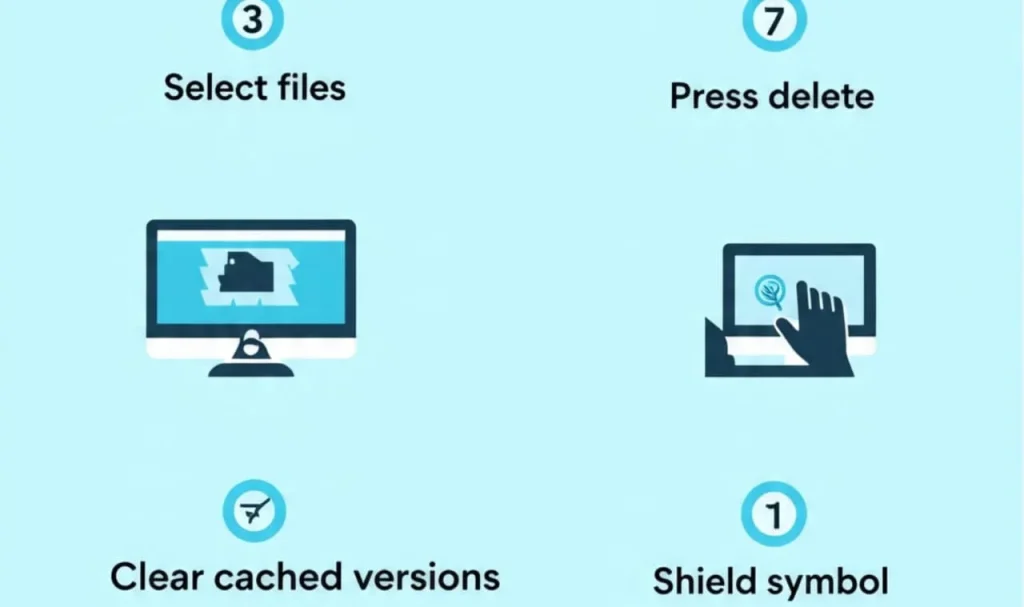
Deleted information may remain in search results in a hacked version. Users have to request that search engines such as Google or Bing remove their content in order to know how to make it impossible. These engines archive snapshots which cannot fade away without being requested to be removed manually.
The removal of search engine tools removes the old-fashioned versions in the cache and makes it less visible. This will not show old contents in results many years after they have been deleted. Deleting the caches enhances your privacy and makes the material never to be seen again in the search results.
Contacting Website Owners for Removal
There are other occasions when the content is on a platform or a site that is not under your control. In this case, the first step in the process of delete online content forever is to contact the owners of the sites. Requesting to be removed is a polite way of removing the unauthorized or unwanted content on the third party pages.
Web hosts have a fast response rate to requests to remove information, and in privacy cases. It is more successful to provide precise URLs. Legal takedowns might be possible in case the owners of the sites do not comply. Direct communication guarantees enhanced and quicker deletion across external locations.
Using Legal and Privacy Takedown Tools
There might be a need to use legal tools to learn how to delete online content in a permanent manner. Unauthorized posts or stolen content are eliminated with the help of DMCA requests, claims of privacy violations, and platform-specific legal forms. These are useful in clearing the websites that do not respond in a voluntary manner.
Takedowns are more authoritative and guarantee compliance to removal requests by the platforms. They are particularly applied to personal information, copyrighted, and harmful information. Through the legal means, permanent deletion is enforced and secures long-term digital safety.
Removing Content From Backups and Cloud Storage
Removing information on clouds is an essential procedure in the process of permanently removing online information. Because of the backups, synced folders, or archived systems, files that are deleted can still exist in backups, synced folders, or archived systems. Checking cloud accounts will make sure that the copies are deleted.
Switching off auto-sync will make deleted files not to reappear again. Removing trash folders and outdated backup versions is a sure way of getting content permanently lost. Cloud cleanup enhances your deletion procedure and avoids any accidental recovery of undesired materials.
Checking Archived Websites and Online Tools
Blogs, forums, and other pages that have been deleted might be archived by the Wayback machine. Knowledge of these tools is critical in understanding the ways of delete online content permanently. Others permit removal requests when the material in the archives is in breach of privacy or copyright regulations.
Removal through the deletion request on the archiving services is to make sure that your content is not publicly available any longer. This is particularly significant in case of old websites, blogs and personal pages. Deleting archived copies is the final step towards removing digital privacy and securing privacy in the long term.
Maintaining Long-Term Content Control
There is also long-term monitoring in learning how to permanently delete online content. Frequently reviewing search results, platform settings, and files shared can also be used to make sure that deleted items do not re-emerge. Surveillance keeps your personal data safe and your online reputation unstained.
It is possible to use powerful privacy settings, restrict sharing, and review posts tagged to avoid spreading unwanted content in the future. To be in control, one needs to work at it. Long term management assists in the maintenance of a safe web presence and also makes sure that the deleted material remains removed.
FAQs
Final Thoughts
Learning to permanently remove the content on the internet provides the user with enhanced power on their online identity. People can delete unwanted content by getting rid of platform copies, clearing caches, reaching out to site owners, and deleting backups. The following measures safeguard privacy and guarantee long-term digital safety, which makes your presence on the Web less polluted and risk-free.
Permanent deletion demands continuous monitoring and management. Constant monitoring, privacy settings and sharing control help avoid future problems. With the use of these methods regularly, users have a higher level of control over their online data. Safety, professionalism, and peace of mind are just some of the benefits of a well-managed online presence on all the platforms.